
For agency owners and website designers, cold calling remains one of the fastest ways to land new clients. However, any experienced salesperson will tell you that a massive percentage of your outbound dials will inevitably end up in a voicemail box.
Most people see a voicemail as a dead end. They leave a generic pitch, hang up, and never hear back.
Recently, I targeted a local dog grooming business that had absolutely zero web presence. When the call went straight to voicemail, I didn’t leave a pitch. Instead, I used a specific, strategic “accidental hang-up” trick that sparks instant urgency. It worked perfectly. The business owner called me back, and I successfully transitioned that curiosity into a booked demo to show them exactly what a new website from LE Digital Marketing could do for their business.
Here is the psychological breakdown of why traditional voicemails fail, and how you can use the mid-sentence cut-off to skyrocket your call-back rates.
The Fatal Flaw of the Standard Sales Voicemail
When a business owner listens to their messages, they are looking for reasons to delete them. If you leave a message that sounds like a pitch, you make it incredibly easy for them to press the delete button.
Standard messages usually sound something like this: “Hi, my name is Christopher from LE Digital Marketing. We build websites for dog groomers and I wanted to see if you have time for a call this week…”
This approach fails because it immediately triggers sales resistance. The owner knows you want their money, so they delete the message. You have given away all the information, eliminating any mystery or reason for them to dial your number back.
Flipping the Script: The Mid-Sentence Hang-Up
To get a busy entrepreneur to stop what they are doing and dial your number back, you have to leverage a powerful psychological trigger: an incomplete loop.
Instead of pitching, you leave a voicemail that sounds exactly like a inbound customer experiencing a dropped cell phone call. The script is simple, direct, and cuts off right at the peak of information:
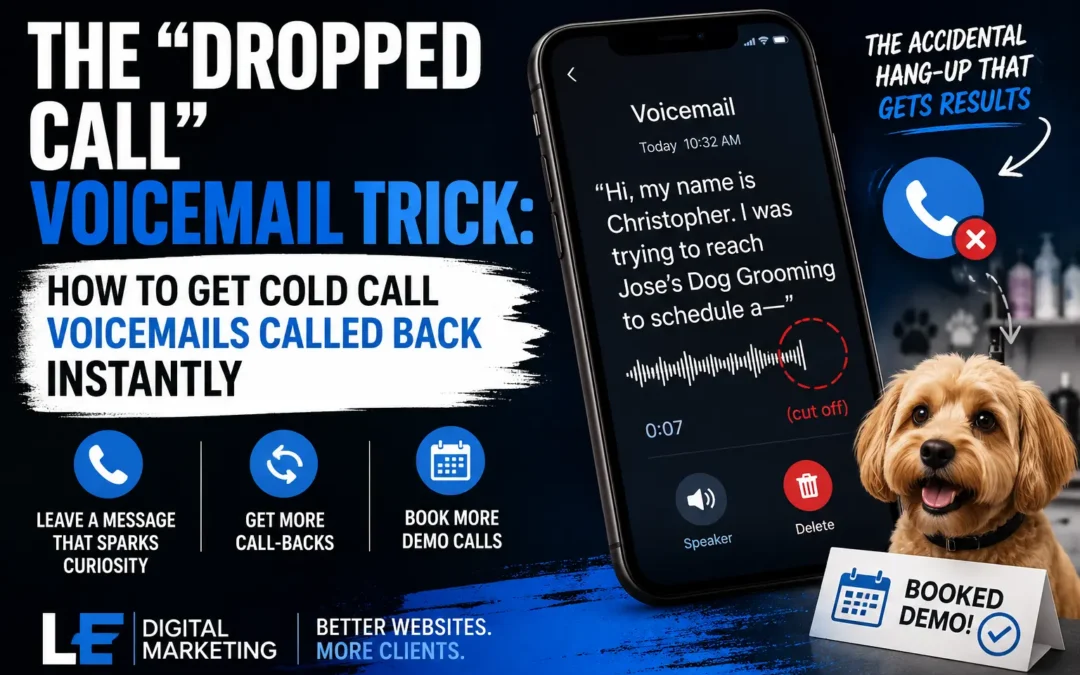
“Hi, my name is Christopher. I was trying to reach Jose’s Dog Grooming to schedule a—” [Click]
By hanging up right in the middle of the word “a,” you trigger an immediate reaction in the business owner’s mind. To a service provider, this doesn’t sound like a telemarketer; it sounds like a paying customer who was actively trying to book an appointment until their call dropped.
Because a missed appointment represents lost revenue, the business owner feels a strong sense of urgency to call the number back and finish the transaction.
The Pivot: From Call-Back to Booked Demo
When the owner dials your number back, the dynamic of the conversation completely changes. They are calling you, which means their natural sales defenses are down.
However, because you used a curiosity trick to get them on the line, your pivot needs to be completely seamless and honest so you do not break their trust. When this dog grooming owner called me back, the transition looked like this:
- Acknowledge the Dropped Call: Confirm your name and apologize for the phone cutting out.
- The Natural Pivot: Explain that you were looking online to try and see how to schedule an appointment with them, but realized they did not have a website or a digital booking system setup.
- Highlight the Opportunity Cost: Pivot immediately into the business problem. Let them know that because they don’t have a website, other local pet owners looking to book a groomer are likely clicking on their competitors instead.
- Offer the Visual Solution: Once the problem is established, offer to show them the solution. Frame the next step as a brief, zero-obligation visual demo of what their business would look like with a professional online booking platform.
By positioning the call around a real operational gap you discovered while trying to look them up, the call-back feels organic rather than deceptive.
Step-by-Step Execution for Your Next Sales Campaign
If you want to implement the dropped-call strategy in your own outreach, keep these guidelines in mind:
-
Personalize the Script: Always use the actual name of the business in the voicemail so it is clear the call was meant specifically for them.
-
Commit to the Cut-Off: Do not fade out or hesitate. Hang up abruptly mid-word to make the dropped-call effect entirely believable.
-
Be Ready for the Return Ring: When your phone rings from that local number a few minutes later, be prepared to step right into your pivot script without missing a beat.
Watch the Live Cold Call and Close
If you want to see exactly how this conversation played out in real time—including the specific tone used to execute the hang-up and the live audio of the demo being booked on the call-back—watch the full video breakdown on our channel.
In the next article, we will break down Part 2 of this case study, detailing the exact objections the owner raised during the call-back and how we navigated them to secure the calendar slot.
If you are a local business owner looking to dominate your market, or an agency looking to refine your sales process, stay tuned for the next breakdown.